Tarkov Gear Guide: Armor, Helmets and Armored Rigs
Most players pick armor by one number: the class. According to the game's own data, that number only tells part of the story. Every figure on this page comes from the 108 body armors and armored rigs and 112 helmets in the game, run through the game's own penetration formula.
The armor class is really the plate class

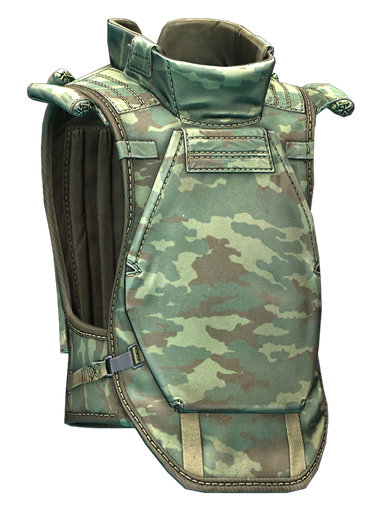
The class shown on an armor is the class of the plates it comes with. Everything the plates do not cover, like the stomach, sides and neck, is protected by soft armor, and that part is almost always class 2 or 3. In 79 of the 108 body armors and rigs, the soft armor is a lower class than the plates.
The 6B13 is a good example: class 4 plates, class 2 soft armor. A 5.45 PS round (28 penetration) gets through a fresh class 4 plate 3% of the time. Put the same round into the soft armor and it goes through 97% of the time. Against someone in a 6B13, aiming at the stomach instead of the chest can decide the fight.
Look at the same thing when you buy your own: models with side plates cover more of your body at full class. The 6B43 Zabralo-Sh is class 6 with front, back and side plates, but its shoulders, collar and groin are class 3 soft armor.
Worn armor gets penetrated far more often
Armor loses resistance as it takes damage. A class 4 armor at half durability keeps only about 86% of its full resistance. That sounds small, but for rounds sitting right at the edge of the armor it changes everything:
| Round | Penetration | Class 4, full durability (%) | Class 4, half durability (%) |
|---|---|---|---|
| 5.45x39 PS | 28 | 3 | 28 |
| 9x19 AP 6.3 | 30 | 9 | 43 |
| 5.56x45 M855 | 31 | 13 | 52 |
| 5.45x39 PP | 34 | 31 | 83 |
| 7.62x39 PS | 35 | 38 | 91 |
The numbers are the chance to penetrate with a single shot. Checking your armor's durability before a raid matters as much as paying for a higher class.
Material sets how fast it wears down. Aramid wears more than three times slower than ceramic (destructibility 0.19 vs 0.6). Ceramic plates give you a high class, but they lose it quickly with every hit.
For helmets, check coverage before class
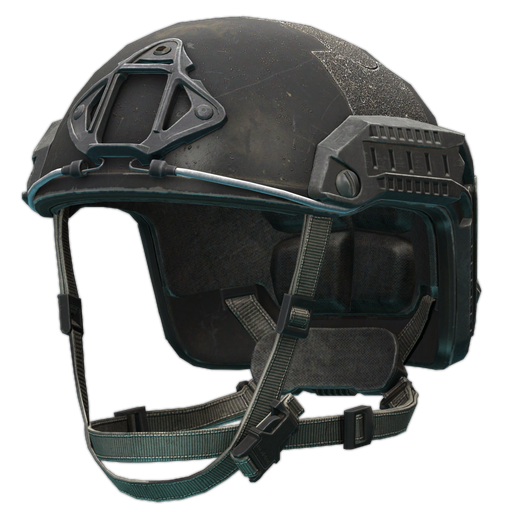
94 of the 112 helmets protect the back of the head, but only 49 cover the ears and just 34 cover the face. If the face is open, the helmet's class means nothing against a round to the face. For face protection you either pick a helmet that covers it or mount a visor or face shield.
Heavy helmets cost you mobility. The Altyn (class 5, 2.5 kg) cuts turn speed by 4% and ergonomics by 3%. The Ops-Core FAST MT (class 4, 0.9 kg) cuts both by only 1%.
Armored rigs follow the same rule
There are 59 armored rigs in the game, combining armor and magazine pouches in one item. The class shown is again the plate class. The Crye Precision AVS is class 4 with its front and back plates, while the parts outside the plates are class 3 soft armor.
Is class 4 armor enough to start with?
It depends on what you get shot with. Rounds like 5.45 PS or 5.56 M855 rarely get through a fresh class 4 plate (3% and 13%), but against the same armor at half durability that rises to 28% and 52%. The areas the plates do not cover are usually class 2 or 3.
Does my helmet protect my face?
Most helmets do not. Only 34 of the 112 helmets in the game cover the face. For face protection you need one of those helmets or a visor or face shield mounted on yours.
What does the class on an armor actually mean?
It is the class of the plates it comes with. The areas the plates do not cover are protected by lower class soft armor. On the 6B13, the plates are class 4 and the soft armor is class 2.